Meta Spirit Sling
Meta Spirit Sling
The Concept
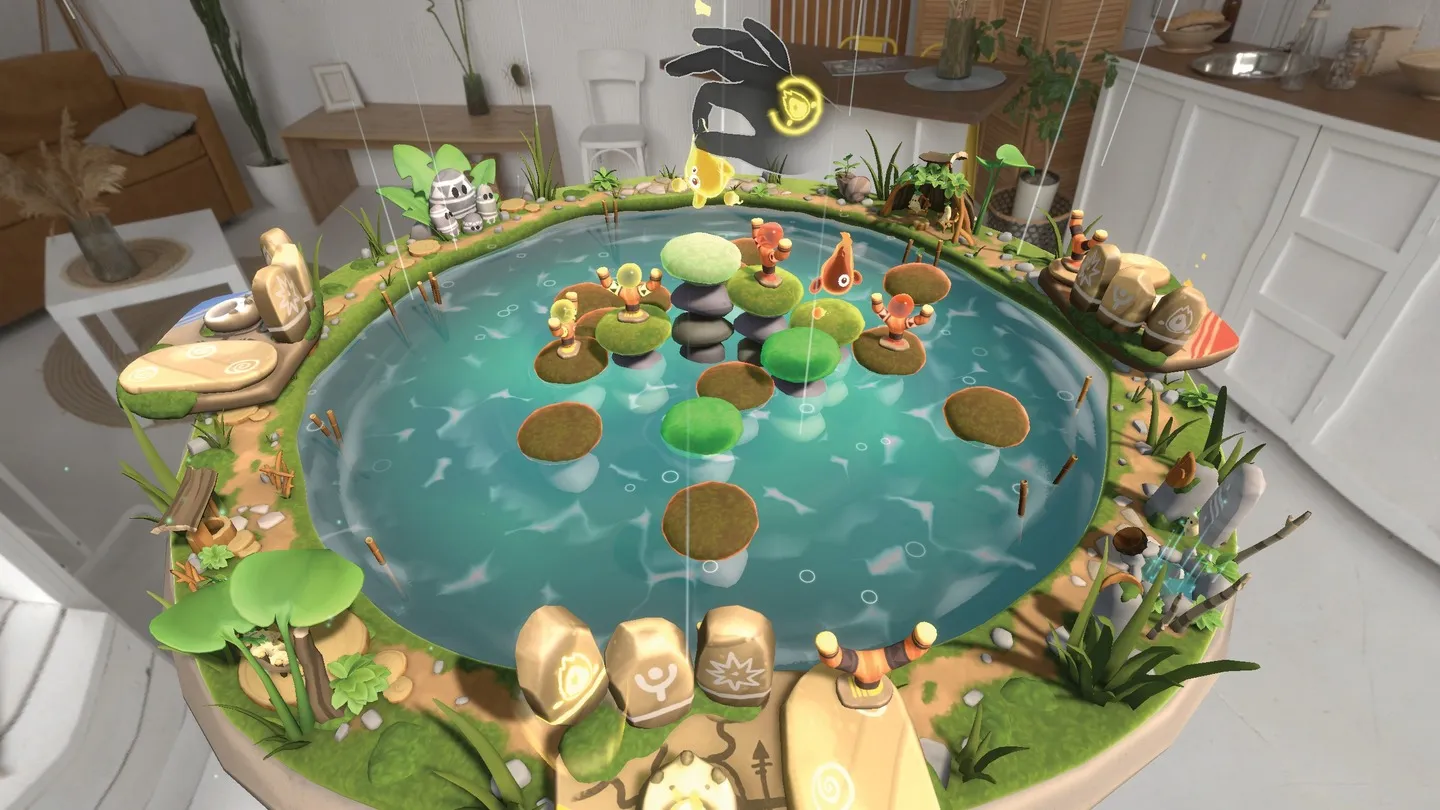
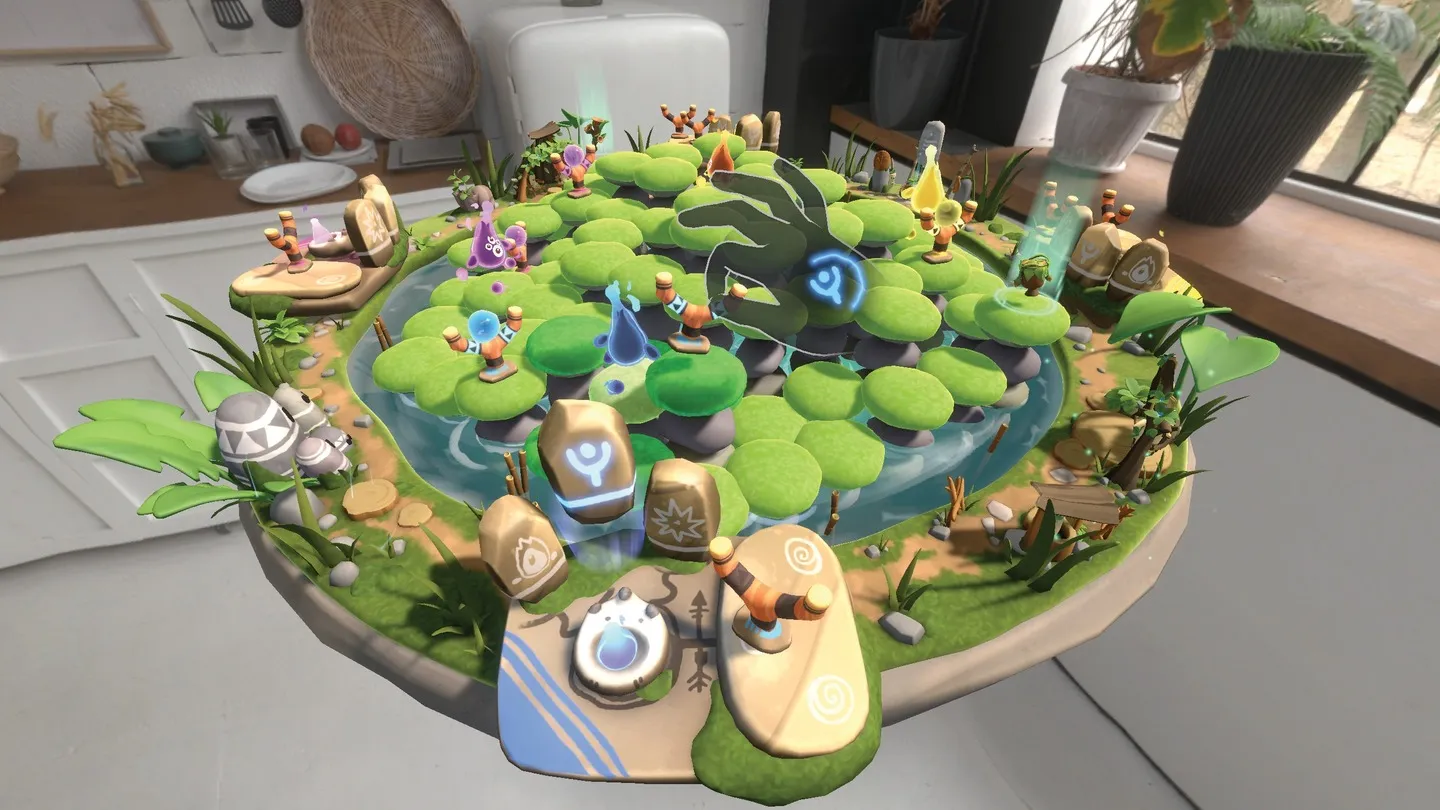
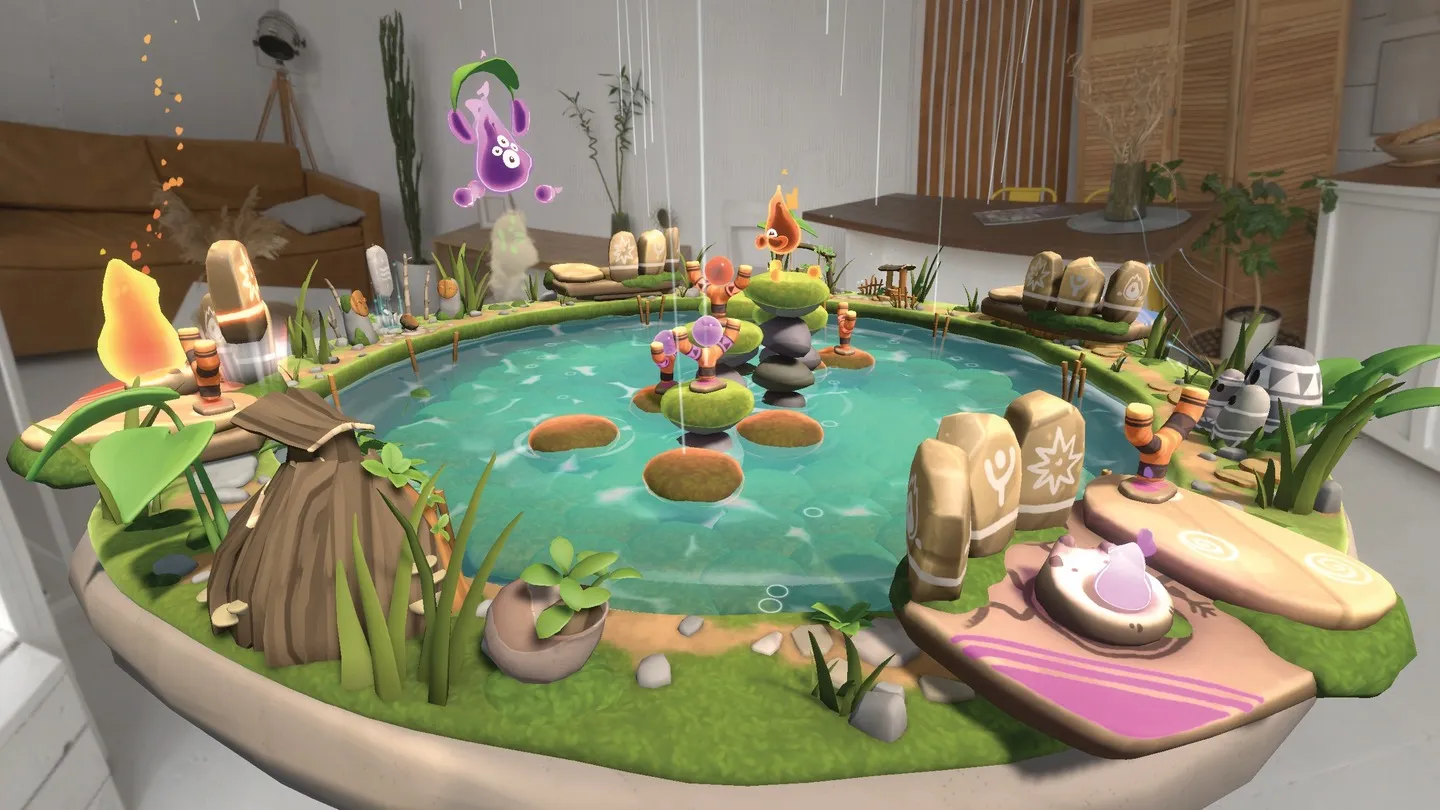
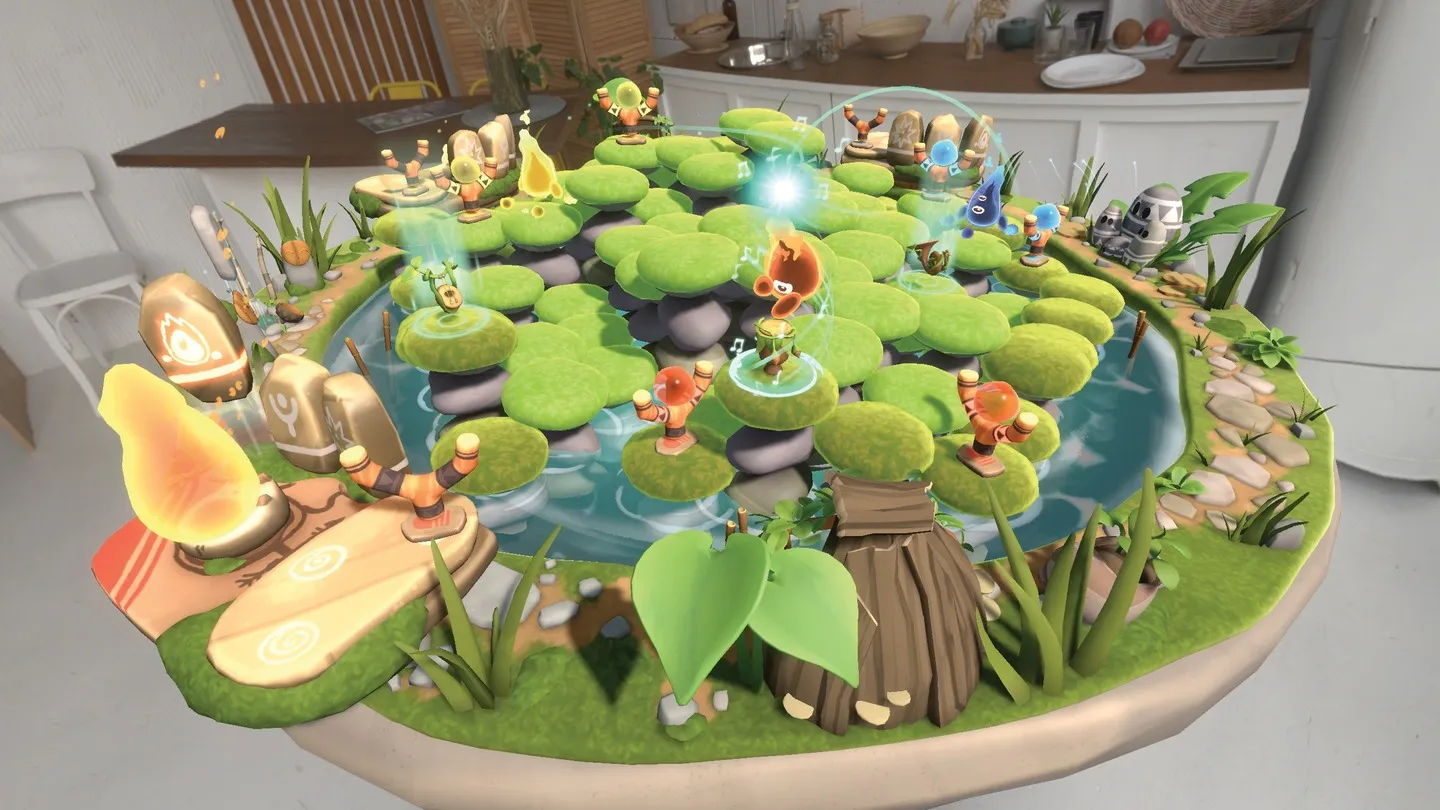
Spirit Sling is an exhilarating multiplayer tabletop Mixed Reality game built in Unity with the Meta SDK, designed for the Meta Quest 3 platform. Up to four players maneuver mystical creatures across a dynamic gameboard that appears right on your real-world table through Meta Quest's passthrough technology. Using their wit and strategically placed slingshots, players outsmart friends and claim victory in this captivating battle of skill and tactics. The mixed reality passthrough feature allows the game board to seamlessly blend with your physical environment, creating an experience that feels like a magical board game has come to life in your living room.
My Contribution
As a gameplay developer on Spirit Sling, I contributed to several core systems that define the player experience. I worked on the slingshot mechanics — the primary interaction model where players grab, aim, and release mystical creatures across the game board. This required precise physics tuning to ensure that slingshot trajectories feel intuitive and satisfying while maintaining competitive balance across different table sizes and room configurations. I contributed to the mixed reality integration layer using the Meta SDK, implementing the spatial anchoring system that locks the game board to the player's real-world table surface and maintains visual consistency as players move around the physical space. I worked on the turn-based game flow system, managing player transitions, action validation, and state synchronization across multiplayer sessions. I also contributed to the creature ability system, where each mystical character possesses unique powers that interact with the board and other creatures in strategically meaningful ways. Collaborating with designers and artists, I helped ensure that the mixed reality presentation felt polished and magical — with virtual creatures casting shadows on real surfaces and game effects responding to the physical environment.
Engineering Mixed Reality on a Real Table
Mixed reality development on the Meta Quest 3 presented a unique set of technical challenges that differ significantly from traditional VR or screen-based game development. The spatial anchoring system needed to work reliably across diverse room setups — different table heights, surfaces, lighting conditions, and physical spaces — while maintaining millimeter-level accuracy to prevent the game board from drifting or misaligning during play sessions. The passthrough compositing required careful depth management to ensure virtual game elements appear correctly layered with the real-world environment, including proper occlusion where physical objects should appear in front of virtual ones. Network synchronization for multiplayer was particularly challenging in MR, as each player's game board position is relative to their own physical space, requiring spatial translation between different players' coordinate systems. The slingshot physics needed to feel consistent regardless of table size, requiring dynamic scaling of force calculations based on the detected play surface. Hand tracking integration for grabbing and aiming slingshots demanded robust gesture recognition that distinguishes intentional game interactions from casual hand movements, preventing accidental inputs during animated conversations around the table. Performance optimization was critical, as the Quest 3 must simultaneously render the passthrough camera feed, process spatial understanding, run physics simulations, and display game graphics — all while maintaining the rock-solid frame rate essential for comfortable MR experiences.
Where It Stands
Spirit Sling shipped on the Meta Quest Store as a mixed-reality tabletop game for up to four players. Working on it gave me hands-on experience with spatial anchoring, passthrough compositing, and the specific interaction-design constraints that mixed reality imposes compared to fully virtual VR — skills I've carried into every MR-adjacent project since.
Project Videos
Screenshots