Rabbids Coding
Rabbids Coding
What It Teaches
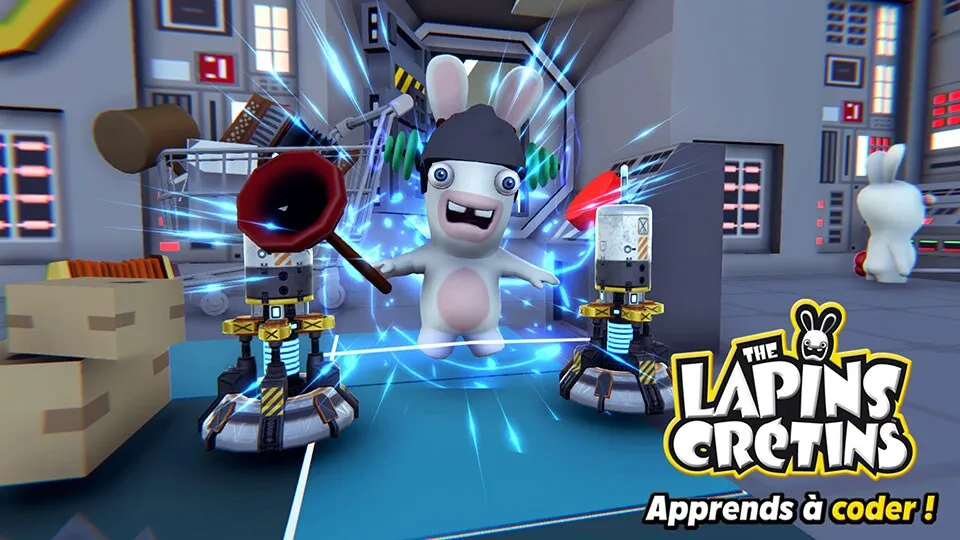
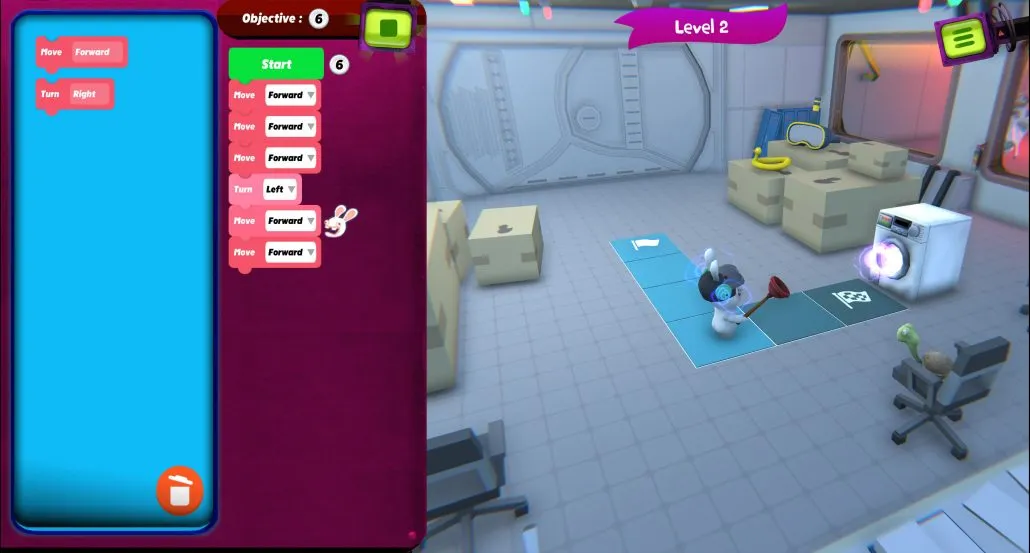
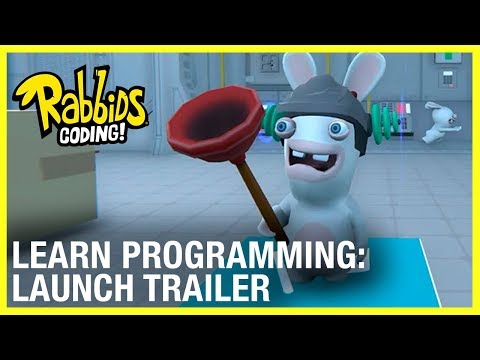
Rabbids Coding is an educational game developed at Ubisoft Lille using Unity, designed to teach the fundamentals of programming through the beloved Rabbids IP. The game uses a visual programming interface where players drag and drop command blocks to guide the mischievous Rabbids through increasingly complex scenarios. Each level introduces new programming concepts, from basic sequencing and loops to conditional logic and optimization challenges. Released on PC and mobile platforms, Rabbids Coding is completely free and accessible to all, reflecting Ubisoft's commitment to making educational content available to the widest possible audience.
My Role on the Ubisoft Lille Team
As a gameplay developer on Rabbids Coding at Ubisoft Lille, I worked on the core gameplay systems that translate complex coding concepts into intuitive, visually engaging puzzles accessible to players of all ages. I contributed to the visual programming interface — the drag-and-drop block system where players assemble sequences of commands to control the Rabbids' actions. This required building a flexible command execution engine that can parse player-constructed programs, execute them step by step with visual feedback, and validate the result against the level's success conditions. I helped implement the progressive difficulty curve, working with game designers and educational consultants to ensure each level introduces exactly one new concept while reinforcing previously learned skills. I worked on the level execution system where the Rabbids physically perform the player's program in the 3D environment, with animated feedback for each command — walks, turns, interactions, and the trademark Rabbids chaos when things go wrong. I also contributed to the optimization challenge system in later levels, where players must solve puzzles using the fewest possible commands, introducing algorithmic thinking and efficiency concepts. Working within the Rabbids IP required adherence to Ubisoft's brand guidelines and close collaboration with the IP team to ensure the characters' humor and personality shone through every interaction.
Making Abstract Code Concepts Visible
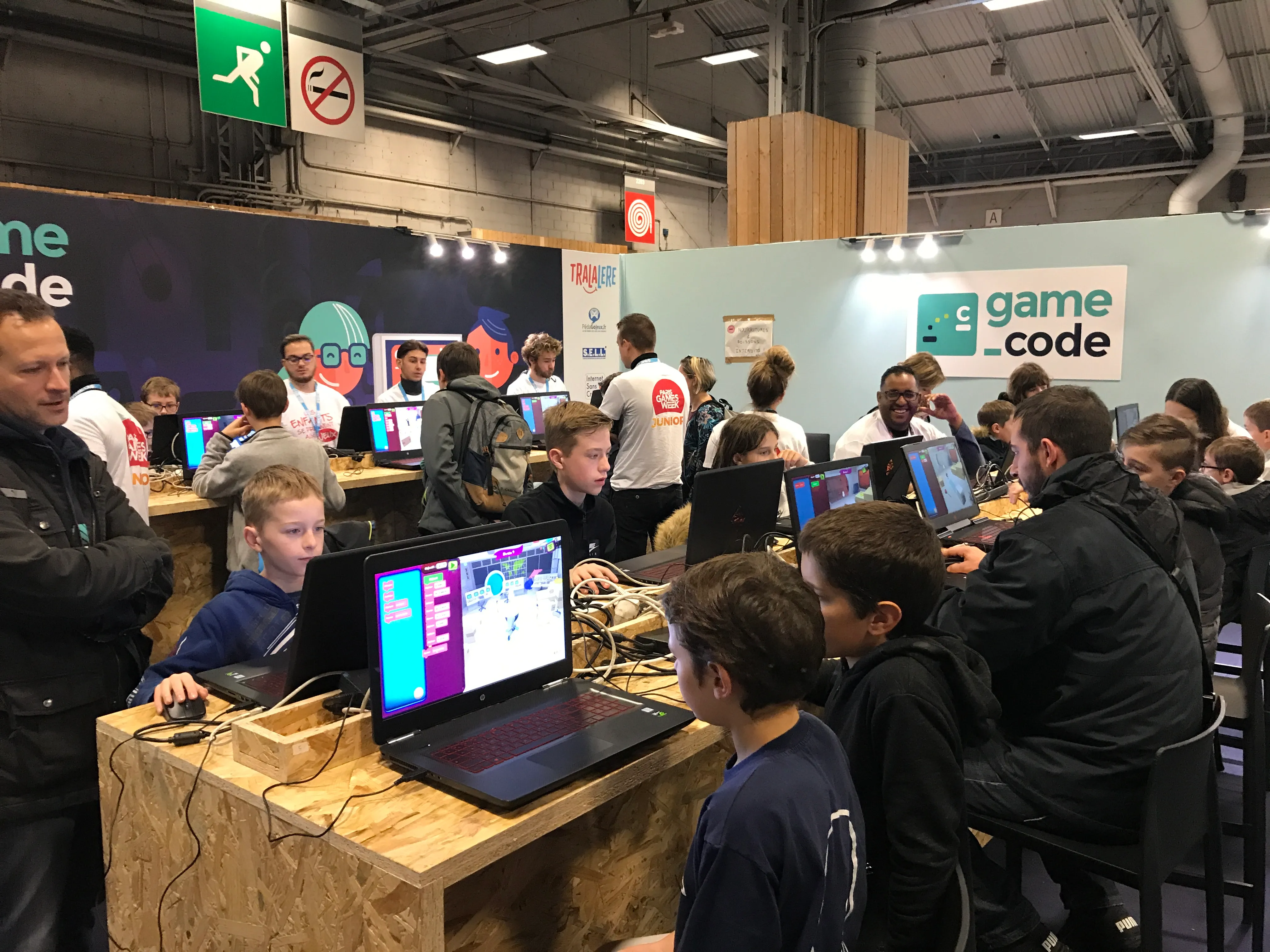
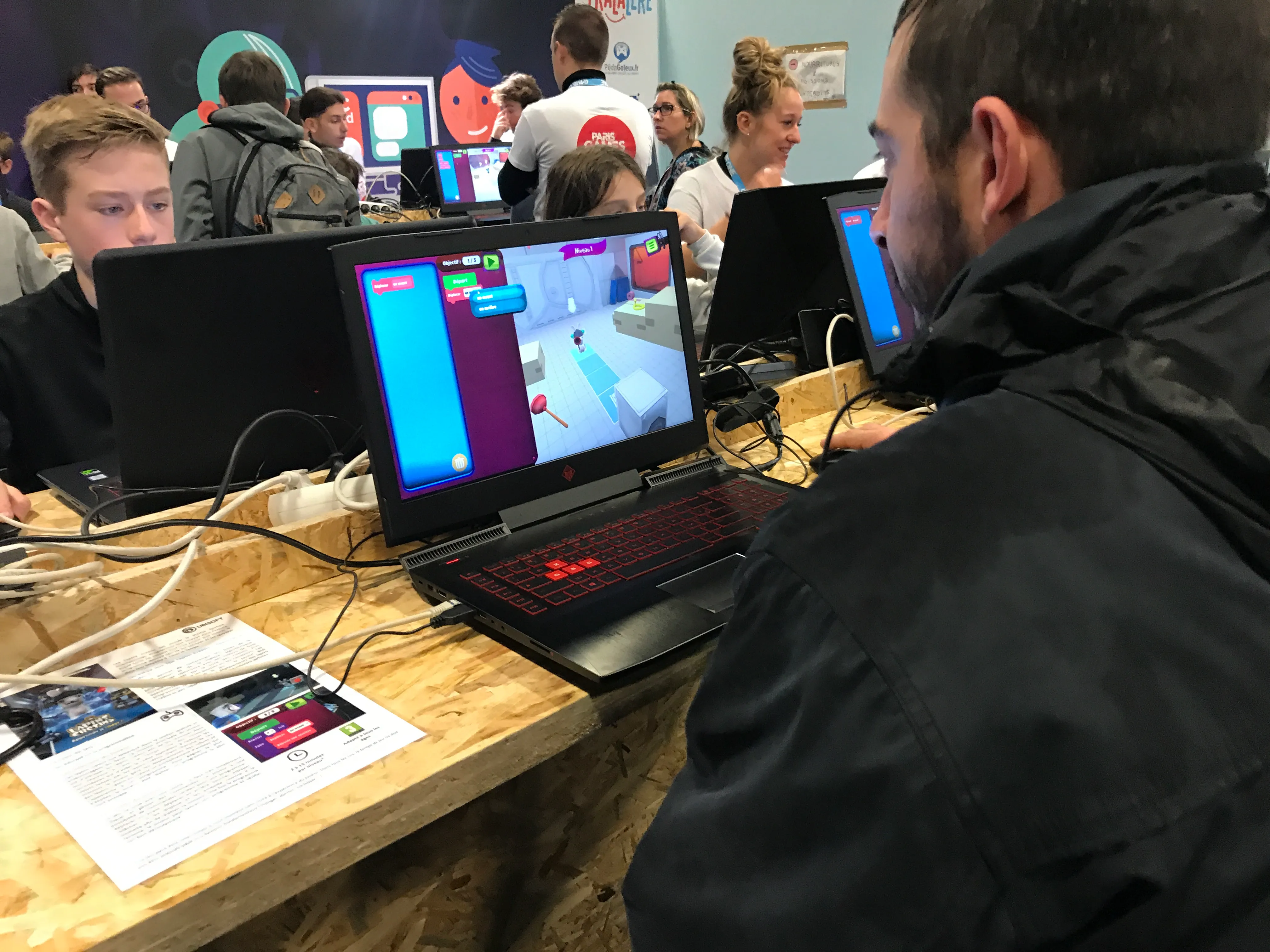
The visual programming system was the central technical challenge of the project. The drag-and-drop interface needed to be instantly intuitive — players should understand how to construct programs within seconds of starting the game, without any prior programming experience. This required extensive UX iteration on block snapping behavior, visual cues for valid connections, and clear differentiation between command types through color coding and iconography. The command execution engine needed to interpret player-built programs reliably, handling edge cases like infinite loops (which must be detected and gracefully interrupted rather than crashing the game), invalid sequences, and partial solutions that provide helpful feedback rather than simple failure messages. Translating abstract programming concepts into concrete visual actions was another significant challenge — when a player uses a "repeat" block, the Rabbid needs to visibly repeat its actions in a way that makes the loop concept tangible and understandable. The progressive difficulty system required careful tuning through extensive playtesting with the target audience, including children as young as six, to identify where confusion occurs and adjust the teaching pace accordingly. Performance across a wide range of devices — from modern PCs to budget Android tablets used in classrooms — demanded careful optimization of the 3D rendering, animation systems, and UI responsiveness.
Recognition & Impact
Rabbids Coding won Educational Game of the Year at the 2020 Games for Change Awards, recognizing the team's work making programming genuinely approachable for kids as young as six. Released free on PC and mobile, it remains one of the projects I'm proudest of — proof that entertainment value and educational rigor don't have to trade off against each other, and a project that shaped how I think about accessibility in interaction design ever since.
Project Videos
Screenshots